Business before configuration
Vision, outcomes, operating model and governance must shape process, data and technology choices—not the reverse.

A client-side leadership system for designing, governing and delivering HR technology transformation that creates durable operating capability.
The method keeps the organization—not the software, implementation partner or project calendar—at the center of transformation.
Vision, outcomes, operating model and governance must shape process, data and technology choices—not the reverse.
Progress reports describe activity. Quality gates require proof that the organization is ready to absorb the next level of risk.
External partners can accelerate delivery. The client must still own outcomes, decisions, adoption and the operating transition.
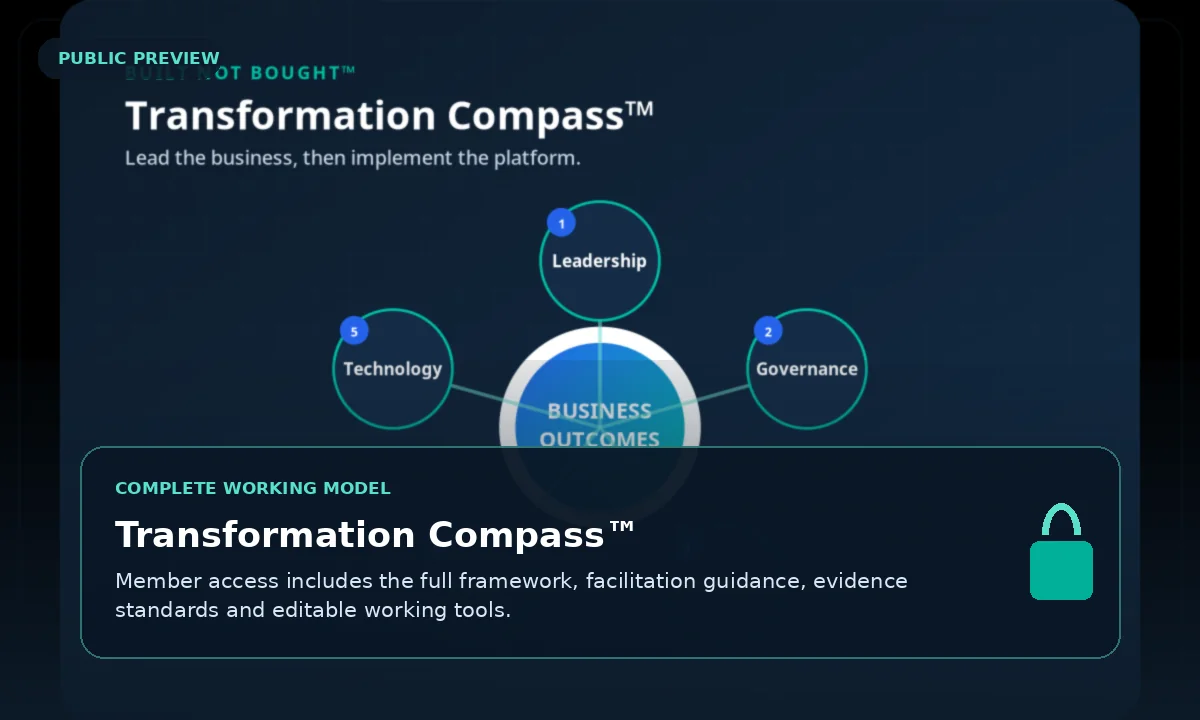
The public architecture balances business outcomes, leadership, governance, technology, adoption and optimization. The licensed model adds the working prompts, outcome map and facilitation sequence.
Make the reason for change specific enough to govern decisions.
Clarify who recommends, decides, owns and escalates.
Build technology around the operating model and the work people must perform.
Treat change readiness as a gate input from the first week.
Know who will own releases, data, support and improvement after go-live.
The motions are not isolated phases. Each one leaves evidence and capability for the next.
Outcomes, principles, success measures and sponsor alignment.
Operating model, governance, standards, process and data.
Plan, capacity, risks, decisions, evidence and gates.
Stakeholders, communications, training, readiness and support.
Stability, insight, releases, backlog and capability transfer.
Each level is designed for a different need: understanding the leadership problem, applying the tools consistently, or interpreting a live transformation pattern.
Principles, framework purpose, core questions, public examples and a limited diagnostic signal.
Complete working models, editable artifacts, evidence standards, scoring, reports and facilitation guidance.
Calibration, benchmarks, intervention choices, sponsor judgment and confidential client-specific application.
When technology choices lead, design becomes a collection of configuration preferences. When outcomes lead, technology becomes a vehicle for capability.
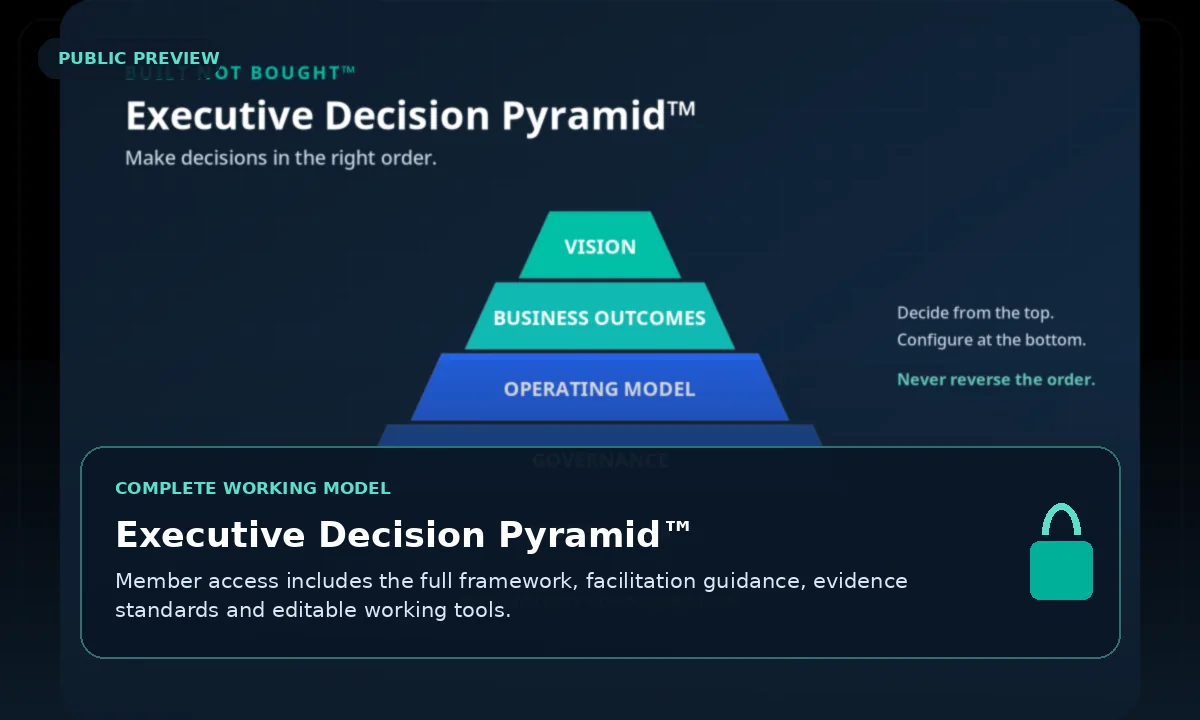
What business capability must become possible, faster, safer or more trusted?
How will work, accountability, standards and decision rights function?
What process, data and configuration choices best enable the approved model?
A healthy partnership is a joint delivery engine with explicit ownership—not a transfer of accountability.
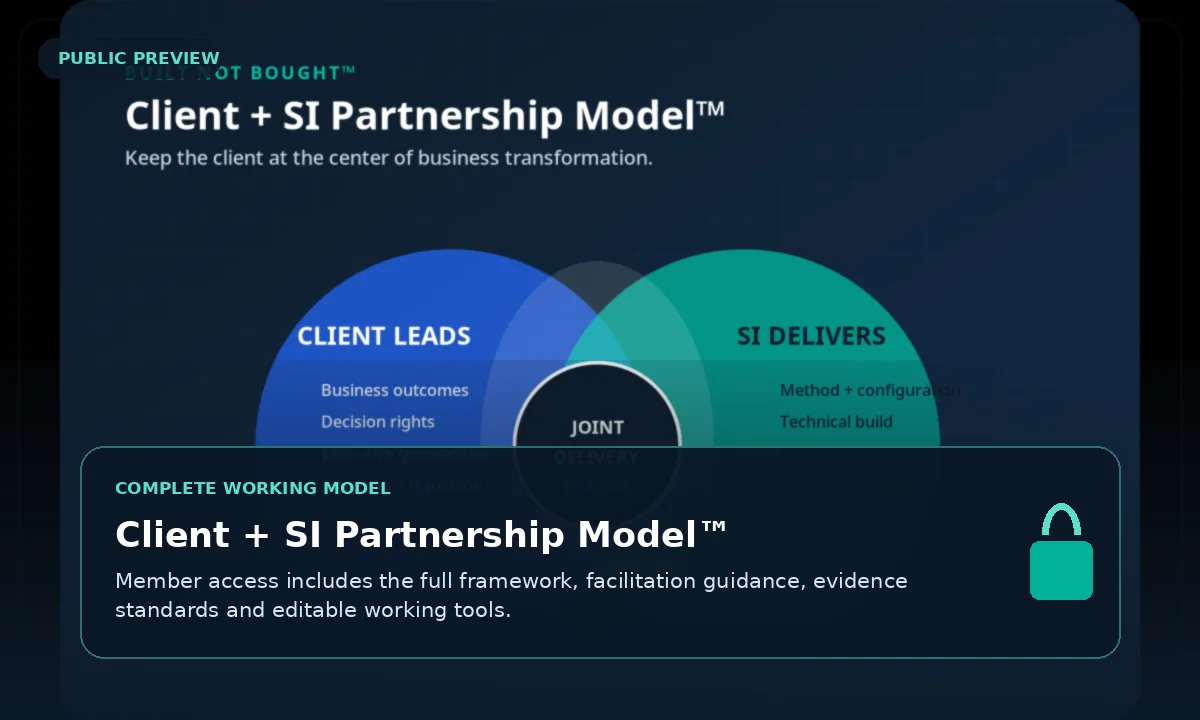
Business outcomes, decision rights, executive governance, resource capacity, adoption, readiness decisions and the operating transition cannot be outsourced.
Run the free leadership pulse for an initial signal, read the book for the complete executive system, or use the Field Kit and advisory services to apply it to live work.